Save $400.00
The Xlaserlab X1 Pro: A Handheld Laser Welder That Combines Four Tools in One Weld stainless steel, aluminum, and carbon steel with professional ...
View full detailsTitanium welding demands precision that traditional arc methods struggle to deliver consistently. TIG welding titanium requires extensive preparation, back-purging, and a level of skill that takes years to develop — and even then, heat discoloration, contamination, and distortion remain constant risks. A handheld fiber laser welder addresses all three: the focused beam delivers extremely low heat input directly to the weld zone, minimizing the heat-affected zone and reducing the risk of the embrittlement and oxidation that make titanium welds fail. With argon shielding gas at adequate flow rates, laser-welded titanium joints come out clean, strong, and with the distinctive silver finish that indicates uncontaminated fusion.
Titanium laser welding is common in motorsport fabrication, cycling and bicycle frame building, aerospace component repair, custom knife making, and medical device prototyping — anywhere the exceptional strength-to-weight ratio of titanium is worth the premium material cost. The key requirement is 1500W or higher laser power for reliable penetration, particularly on alloys like Grade 5 (Ti-6Al-4V) that are common in performance applications. Our team can walk you through the specific argon flow rates, travel speeds, and wire selection for titanium welding on our machines. Book a free consultation before purchasing for titanium applications.
Save $400.00
The Xlaserlab X1 Pro: A Handheld Laser Welder That Combines Four Tools in One Weld stainless steel, aluminum, and carbon steel with professional ...
View full details
Sale
xTool MetalFab: One Machine. A Complete Metal Workshop. Weld, Cut, Clean, and Engrave — All with Industrial-Grade Fiber Laser Precision. The xTool...
View full details
Save $1,000.00
Cut Faster, Weld Cleaner, and Work Anywhere with the Gweike Gweike 3-in-1 Handheld Laser Welder. The Gweike 3-in-1 Handheld Laser Welder redefines ...
View full details
Save $-3,699.00
The Xlaserlab X1: The Lightest, Most Accessible Handheld Laser Welder for Thin Metal Work Clean, precise welds on stainless steel, carbon steel, b...
View full details
Save $1,000.00
Cut Faster, Weld Cleaner, and Work Anywhere with the Gweike Gweike 3-in-1 Handheld Laser Welder. The Gweike 3-in-1 Handheld Laser Welder redefines ...
View full details
Save $-39,000.00
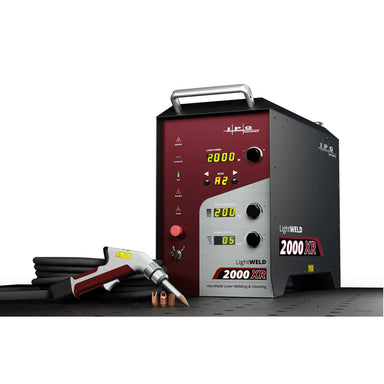
Experience unmatched speed, precision, and cleaning power with the IPG LightWELD 2000 XR Handheld Laser Welder With the LightWELD 2000 XR Handheld ...
View full details
Save $-27,750.00
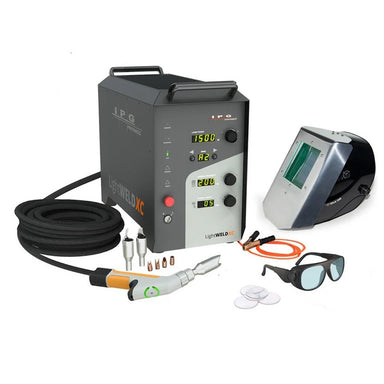
A smarter, faster way to weld and clean with the 1500 XC Laser Welder Machine IPG LightWELD brings the best of modern laser welding and cleaning in...
View full details
Save $-33,000.00
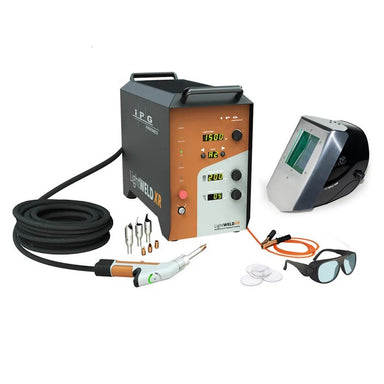
IPG LightWELD 1500 XR Handheld Laser Welder — Revolutionize Your Welding Experience The IPG LightWELD 1500 XR Handheld Laser Welder brings unmatche...
View full details
Save $-22,500.00
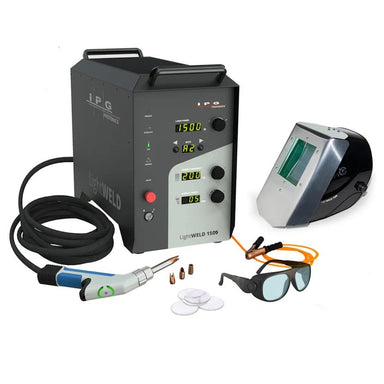
Unleash Industrial Power and Precision with the IPG LightWELD 1500 The LightWELD 1500 Handheld Laser Welding System delivers unmatched power, preci...
View full details
Save $-18,000.00
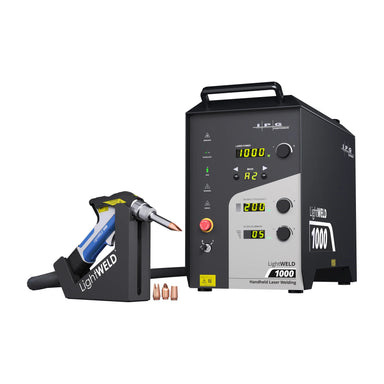
Cut Faster, Weld Cleaner, and Boost Productivity with the IPG LightWELD 1000 The LightWELD 1000 Handheld Laser Welding System is changing the game...
View full detailsTitanium is extremely reactive with oxygen, nitrogen, and hydrogen at welding temperatures — even brief exposure to air above approximately 400°C causes embrittlement and discoloration that degrades both mechanical properties and corrosion resistance. This is why TIG welding titanium traditionally requires a trailing gas shield, back purge, and very precise torch coverage to keep the hot weld metal protected until it cools below the critical temperature. With laser welding, the narrower heat-affected zone and faster cooling rate mean less total area needs protecting, but comprehensive argon shielding from nozzle and trailing shield is still mandatory for quality titanium welds. The distinctive color of the finished weld tells you how well your shielding performed: silver or straw-colored welds indicate good protection; blue, grey, or white indicates oxidation contamination.
Argon is mandatory for titanium laser welding — nitrogen and CO2 are not compatible with titanium. You need both a primary shield through the welding nozzle and a trailing shield that covers the cooling weld bead until it drops below 400°C. For handheld welding, a trailing shield attachment on the welding gun or a custom-made copper or ceramic trailing shoe filled with flowing argon is the standard approach. Back purging (filling the underside of the joint with argon) is also required on closed assemblies. High-purity argon (99.999% — five nines purity) is recommended for titanium; lower purity argon can introduce enough contaminants to cause discoloration. This is the most technically demanding aspect of titanium welding and the area where setup quality most directly impacts result quality.
Titanium laser welding applications include: motorsport fabrication (exhaust systems, roll cage components, suspension parts where weight savings are critical); bicycle and cycling component fabrication (titanium frame tubes, dropouts, custom components); aerospace component repair and prototyping (brackets, fasteners, structural elements in titanium alloys); custom knife making (Ti-6Al-4V blade liners, frame handles, pivot hardware); medical device prototyping (implant-grade titanium assemblies where biocompatibility is required); and architecture and art installations where titanium's color-changing anodization behavior is exploited for aesthetic effect. In most of these applications, the combination of titanium's strength-to-weight ratio and laser welding's low distortion are the dual justifications for the added process complexity.
1500W is the recommended minimum for reliable titanium welding on material above 1mm. Titanium's thermal properties sit between stainless steel (more power needed) and aluminum (less power needed), but its surface reflectivity and strict shielding requirements mean any margin of power inadequacy shows up as inconsistent penetration and poor fusion at the joint. For Ti-6Al-4V (Grade 5), the most common structural titanium alloy, a 1500W machine handles 0.5mm to 2.5mm reliably in a single pass. Grade 2 commercially pure titanium is slightly more forgiving. If titanium welding is a primary application, book a consultation with our team — we will advise on the exact machine, shielding setup, and parameter starting points for your specific alloy and joint type.
Technically yes, but with significant limitations. Titanium-to-stainless dissimilar welds are metallurgically challenging because the two metals form brittle intermetallic compounds (particularly titanium-iron and titanium-nickel phases) at the weld interface that reduce joint ductility. These joints are used in specialized applications — medical devices, chemical processing equipment — where a thin, carefully controlled fusion zone minimizes intermetallic formation. For structural applications requiring titanium-to-stainless joining, a nickel alloy interlayer or titanium clad material is typically the better engineering solution. If you have a specific dissimilar metal joining requirement, contact our team before purchasing — we will give you an honest assessment of what is feasible with the machines we carry.
Shipping Insurance ($89)