Save $400.00
The Xlaserlab X1 Pro: A Handheld Laser Welder That Combines Four Tools in One Weld stainless steel, aluminum, and carbon steel with professional ...
View full detailsCopper welding is notoriously difficult with conventional methods for two fundamental reasons: its extremely high thermal conductivity dissipates heat away from the weld zone faster than the arc can supply it, and its high reflectivity bounces energy back toward the electrode rather than into the workpiece. The result is inconsistent fusion, excessive heat input to achieve penetration, and welds that are prone to cracking and porosity. A high-energy density fiber laser welder overcomes copper's reflectivity through sheer intensity — the focused beam delivers enough energy density to initiate fusion before the surrounding metal can dissipate it, producing clean, strong copper welds with far less total heat input than TIG or MIG.
Laser welding copper is used in plumbing fabrication, electrical component assembly, custom lighting and decorative copperwork, HVAC copper pipe joining, and EV battery busbar prototyping. The key requirements are higher power (1500W+) and copper-compatible wire for filler-assisted joints. Our machines handle copper with the appropriate shielding gas and parameter settings — and our team can advise on the specific power level and configuration your copper applications require. Book a free pre-purchase consultation if copper is a primary material for your welding work.
Save $400.00
The Xlaserlab X1 Pro: A Handheld Laser Welder That Combines Four Tools in One Weld stainless steel, aluminum, and carbon steel with professional ...
View full details
Sale
xTool MetalFab: One Machine. A Complete Metal Workshop. Weld, Cut, Clean, and Engrave — All with Industrial-Grade Fiber Laser Precision. The xTool...
View full details
Save $1,000.00
Cut Faster, Weld Cleaner, and Work Anywhere with the Gweike Gweike 3-in-1 Handheld Laser Welder. The Gweike 3-in-1 Handheld Laser Welder redefines ...
View full details
Save $-3,699.00
The Xlaserlab X1: The Lightest, Most Accessible Handheld Laser Welder for Thin Metal Work Clean, precise welds on stainless steel, carbon steel, b...
View full details
Save $1,000.00
Cut Faster, Weld Cleaner, and Work Anywhere with the Gweike Gweike 3-in-1 Handheld Laser Welder. The Gweike 3-in-1 Handheld Laser Welder redefines ...
View full details
Save $-39,000.00
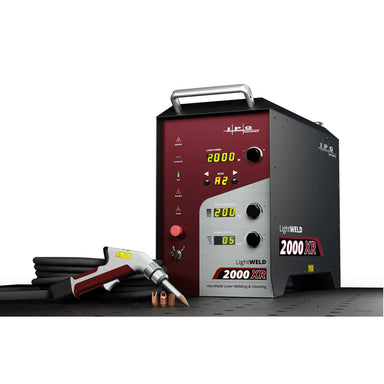
Experience unmatched speed, precision, and cleaning power with the IPG LightWELD 2000 XR Handheld Laser Welder With the LightWELD 2000 XR Handheld ...
View full details
Save $-27,750.00
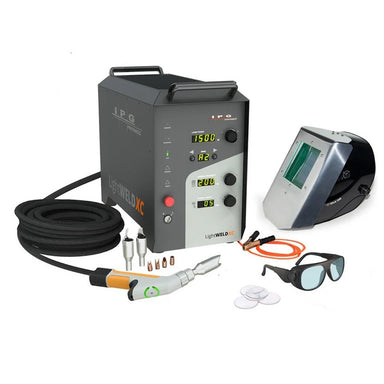
A smarter, faster way to weld and clean with the 1500 XC Laser Welder Machine IPG LightWELD brings the best of modern laser welding and cleaning in...
View full details
Save $-33,000.00
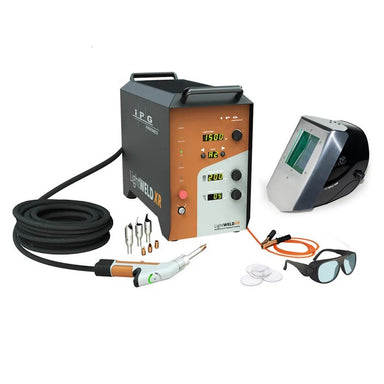
IPG LightWELD 1500 XR Handheld Laser Welder — Revolutionize Your Welding Experience The IPG LightWELD 1500 XR Handheld Laser Welder brings unmatche...
View full details
Save $-22,500.00
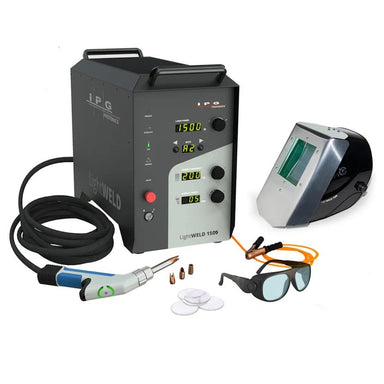
Unleash Industrial Power and Precision with the IPG LightWELD 1500 The LightWELD 1500 Handheld Laser Welding System delivers unmatched power, preci...
View full details
Save $-18,000.00
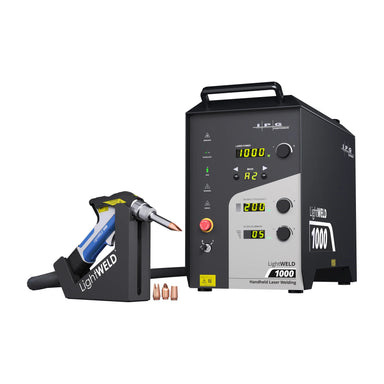
Cut Faster, Weld Cleaner, and Boost Productivity with the IPG LightWELD 1000 The LightWELD 1000 Handheld Laser Welding System is changing the game...
View full detailsCopper presents two fundamental challenges that make traditional welding difficult. First, its extremely high thermal conductivity (401 W/m·K — nearly ten times higher than stainless steel) pulls heat away from the weld zone so fast that it is difficult to build the local energy density needed to achieve fusion before the surrounding metal drains the heat away. Second, copper's high reflectivity at infrared wavelengths means a significant portion of the arc energy or laser energy bounces back rather than being absorbed into the workpiece. The result: inconsistent fusion, excessive total heat input required to achieve penetration, and welds prone to cracking and porosity. TIG welding copper requires high amperages, extensive preheat, and tight process control that is difficult to maintain consistently.
Yes — fiber laser welding overcomes copper's reflectivity through energy density rather than total energy. While copper does reflect a significant portion of near-infrared (1064–1080nm) laser light at the surface, once the beam initiates a keyhole — a small vapor cavity created by vaporizing the surface layer — absorption rises dramatically and welding proceeds efficiently. The key is having sufficient power density to initiate the keyhole, which is why 1500W+ is recommended for copper welding. Below that threshold, the beam may not consistently establish a keyhole, resulting in reflections and inconsistent fusion. Once keyhole mode is established, fiber laser welding produces clean copper welds significantly faster than TIG and with less total heat input to the surrounding material.
Argon is the standard shielding gas for copper laser welding, used at flow rates of 20–30 L/min. Helium or argon/helium mixes improve energy absorption and are used in higher-power industrial copper welding, but argon is appropriate for all handheld applications. For filler wire, ERCu (deoxidized copper wire) is the standard choice for welding pure copper. For copper-nickel alloys, use ERCuNi. For brass (copper-zinc), use ERCuSi-A silicon bronze wire — silicon bronze has better wettability and produces cleaner joints on copper alloys than matched-composition filler. Wire diameter of 0.8mm or 1.0mm is appropriate for most handheld copper applications.
Copper laser welding is common in: plumbing and refrigeration copper pipe fittings (particularly food-grade and pharmaceutical applications requiring clean, contamination-free joints); electrical component fabrication including bus bars, terminal connections, and battery cell assemblies; custom lighting and decorative copperwork including furniture, fixtures, and art installations; HVAC copper evaporator and condenser coil fabrication; and emerging applications in EV battery manufacturing where copper busbar welding to dissimilar metals (aluminum, nickel) is a growing requirement. For any application where joint cleanliness and conductivity preservation at the weld are critical, laser welding outperforms TIG or soldering on copper.
Yes — laser welding is particularly capable at dissimilar metal joining that traditional welding cannot achieve reliably. Common copper dissimilar metal welds include: copper to stainless steel (common in heat exchangers and industrial fittings); copper to aluminum (critical in EV battery manufacturing for busbar connections); copper to brass; and copper to nickel alloys. These combinations require careful parameter control and sometimes specific filler materials to manage the intermetallic compounds that form at the joint — the tight energy control of a fiber laser welder is what makes these joints feasible at all. Contact our team for specific guidance on dissimilar copper welding for your application.
Shipping Insurance ($89)