Save $400.00
The Xlaserlab X1 Pro: A Handheld Laser Welder That Combines Four Tools in One Weld stainless steel, aluminum, and carbon steel with professional ...
View full detailsBrass welding is one of the most challenging applications in traditional metalworking. TIG welding brass produces significant zinc outgassing as the zinc content vaporizes under the arc, leaving porous, weak welds and generating toxic zinc oxide fumes. Handheld fiber laser welding addresses this directly: the highly focused, lower-heat-input beam melts brass at the weld interface without the sustained high temperatures that drive zinc volatilization. The result is cleaner, stronger brass welds with dramatically lower porosity and significantly reduced fume generation — though proper ventilation remains essential for all laser welding operations.
Brass laser welding is used across a wide range of applications: musical instrument repair, decorative hardware fabrication, custom plumbing fittings, custom lighting fixtures, brass sculpture and art, and trophy and award fabrication. The material's warm golden appearance makes post-weld aesthetics especially important, and laser welding's minimal heat discoloration preserves the brass finish better than arc methods. Compatible machines in our collection handle brass in the 0.5mm to 3mm range with appropriate filler wire. Not sure which machine and settings are right for your brass work? Book a free pre-purchase consultation and we will give you a straight answer.
Save $400.00
The Xlaserlab X1 Pro: A Handheld Laser Welder That Combines Four Tools in One Weld stainless steel, aluminum, and carbon steel with professional ...
View full details
Sale
xTool MetalFab: One Machine. A Complete Metal Workshop. Weld, Cut, Clean, and Engrave — All with Industrial-Grade Fiber Laser Precision. The xTool...
View full details
Save $1,000.00
Cut Faster, Weld Cleaner, and Work Anywhere with the Gweike Gweike 3-in-1 Handheld Laser Welder. The Gweike 3-in-1 Handheld Laser Welder redefines ...
View full details
Save $-3,699.00
The Xlaserlab X1: The Lightest, Most Accessible Handheld Laser Welder for Thin Metal Work Clean, precise welds on stainless steel, carbon steel, b...
View full details
Save $1,000.00
Cut Faster, Weld Cleaner, and Work Anywhere with the Gweike Gweike 3-in-1 Handheld Laser Welder. The Gweike 3-in-1 Handheld Laser Welder redefines ...
View full details
Save $-39,000.00
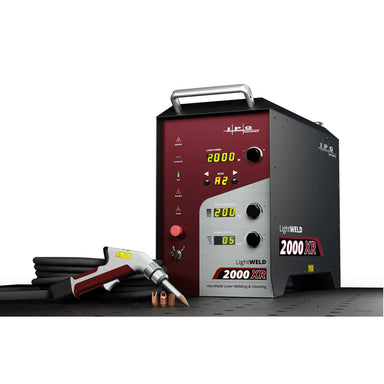
Experience unmatched speed, precision, and cleaning power with the IPG LightWELD 2000 XR Handheld Laser Welder With the LightWELD 2000 XR Handheld ...
View full details
Save $-27,750.00
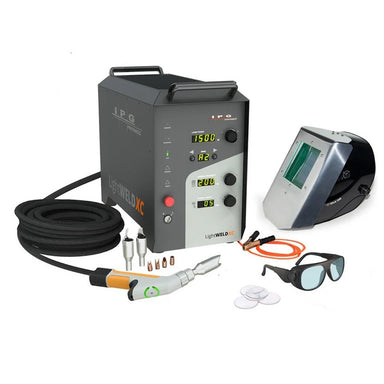
A smarter, faster way to weld and clean with the 1500 XC Laser Welder Machine IPG LightWELD brings the best of modern laser welding and cleaning in...
View full details
Save $-33,000.00
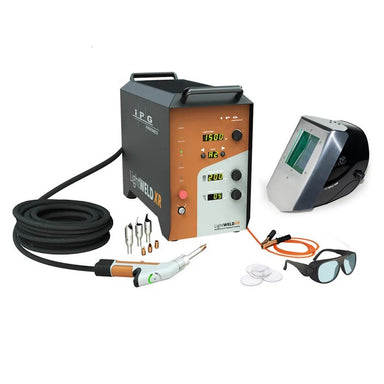
IPG LightWELD 1500 XR Handheld Laser Welder — Revolutionize Your Welding Experience The IPG LightWELD 1500 XR Handheld Laser Welder brings unmatche...
View full details
Save $-22,500.00
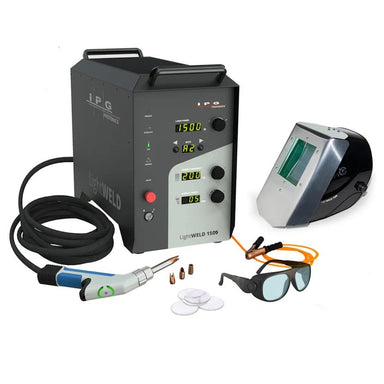
Unleash Industrial Power and Precision with the IPG LightWELD 1500 The LightWELD 1500 Handheld Laser Welding System delivers unmatched power, preci...
View full details
Save $-18,000.00
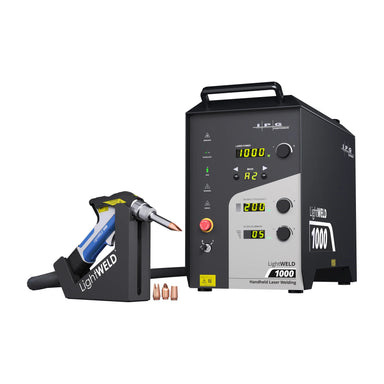
Cut Faster, Weld Cleaner, and Boost Productivity with the IPG LightWELD 1000 The LightWELD 1000 Handheld Laser Welding System is changing the game...
View full detailsBrass is a copper-zinc alloy, and zinc vaporizes at 907°C — well below the melting point of the copper matrix (above 900°C for most brass alloys). When TIG welding generates the sustained high temperatures needed to fuse the joint, zinc boils out of the melt pool in large volumes, creating gas porosity, a rough weld surface, and toxic zinc oxide fumes. The weld metal that remains is zinc-depleted and structurally inferior to the base material. Laser welding's precise energy control minimizes the time the weld pool spends above zinc's vaporization temperature, reducing outgassing and producing noticeably cleaner, stronger brass welds with far lower porosity and a significantly reduced fume signature compared to TIG or MIG on the same material.
The most common filler for brass laser welding is ERCuSi-A (silicon bronze wire), which contains copper, silicon, and small amounts of manganese. Silicon bronze has a lower melting point than brass, excellent wettability, and produces clean-flowing welds on brass and copper alloys with minimal porosity. It is particularly suited for decorative brass work, hardware, and instrument repair where a smooth bead appearance is important. For structural brass joints where strength rather than appearance is the priority, ERCuZn (naval brass filler wire) more closely matches the composition of the base metal. In both cases, 0.8mm diameter is appropriate for most handheld brass welding applications under 2mm thickness.
Yes — fiber laser welding is one of the best methods available for brass instrument repair, including trumpet bell cracks, trombone slide repairs, french horn tubing joints, and tuba bell dents that require metal added. The focused beam can deposit filler material on areas as small as 1mm without heating adjacent sections, preserving the thin-wall instrument tubing and lacquer coatings on undamaged sections. The process is far more controllable than torch silver soldering (the traditional method) and produces joints with lower thermal spread. For instrument repair shops, the same machine that handles brass repairs also handles silver-plated components, nickel silver parts, and occasionally gold-plated bells — making it a versatile addition to any instrument repair bench.
Handheld fiber laser welders in the 700W to 1200W range handle brass from 0.5mm to approximately 3mm in a single pass. Brass in this thickness range covers virtually all decorative metalwork, hardware fabrication, plumbing fittings, musical instruments, and jewelry applications. Thicker structural brass above 3mm is less common in handheld applications; water-cooled higher-power machines handle these where needed. The key parameter adjustment for brass versus stainless is slightly higher power and slightly lower travel speed to account for brass's higher reflectivity — but the process is not dramatically different, and most users dialing in from stainless settings reach good brass parameters quickly.
Brass surface preparation for laser welding follows the same principles as other metals but with extra attention to two factors. First, remove any lacquer, plating, or surface coating from the joint area — these coatings generate toxic fumes and contaminate the weld. Use acetone or a lacquer stripper to clean a zone around the weld before heating. Second, degrease thoroughly — brass is commonly handled with bare hands in fabrication, and skin oils contaminate the weld zone and cause surface porosity. Wipe with acetone immediately before welding and handle the cleaned area with gloves until the weld is complete. Beyond that, standard argon shielding at 15–20 L/min and appropriate filler wire are all that is needed.
Shipping Insurance ($89)