Save $400.00
The Xlaserlab X1 Pro: A Handheld Laser Welder That Combines Four Tools in One Weld stainless steel, aluminum, and carbon steel with professional ...
View full detailsStainless steel is where handheld laser welding demonstrates its most dramatic advantage over TIG and MIG. The narrow, focused beam of a fiber laser welder produces a tiny heat-affected zone that leaves surrounding metal undisturbed — delivering smooth, spatter-free weld beads on 304 and 316 stainless that often require zero post-weld grinding or polishing. For fabricators producing stainless steel furniture, kitchen equipment, railings, enclosures, or architectural metalwork, this is transformative: work that used to take hours of finishing now comes off the machine looking finished. Stainless steel responds better to laser welding than almost any other material, making it the recommended starting point for any first-time laser welder buyer.
For stainless steel from 0.2mm to 3mm, a handheld fiber laser welder consistently outperforms TIG on speed, aesthetics, and learning curve. With argon shielding gas protecting the weld pool and lens optics, the process is clean, controlled, and repeatable across production runs. Our collection includes machines optimized for stainless work at every power level — from the Xlaserlab X1 for ultra-thin precision work to the X1 Pro and Gweike machines for production stainless fabrication. Not sure which wattage or brand is right for your stainless applications? Book a free consultation and we will match you to the right machine.
Save $400.00
The Xlaserlab X1 Pro: A Handheld Laser Welder That Combines Four Tools in One Weld stainless steel, aluminum, and carbon steel with professional ...
View full details
Sale
xTool MetalFab: One Machine. A Complete Metal Workshop. Weld, Cut, Clean, and Engrave — All with Industrial-Grade Fiber Laser Precision. The xTool...
View full details
Save $1,000.00
Cut Faster, Weld Cleaner, and Work Anywhere with the Gweike Gweike 3-in-1 Handheld Laser Welder. The Gweike 3-in-1 Handheld Laser Welder redefines ...
View full details
Save $-3,699.00
The Xlaserlab X1: The Lightest, Most Accessible Handheld Laser Welder for Thin Metal Work Clean, precise welds on stainless steel, carbon steel, b...
View full details
Save $1,000.00
Cut Faster, Weld Cleaner, and Work Anywhere with the Gweike Gweike 3-in-1 Handheld Laser Welder. The Gweike 3-in-1 Handheld Laser Welder redefines ...
View full details
Save $-39,000.00
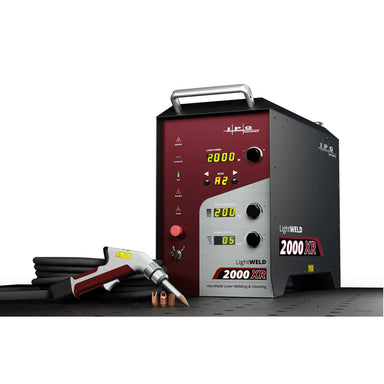
Experience unmatched speed, precision, and cleaning power with the IPG LightWELD 2000 XR Handheld Laser Welder With the LightWELD 2000 XR Handheld ...
View full details
Save $-27,750.00
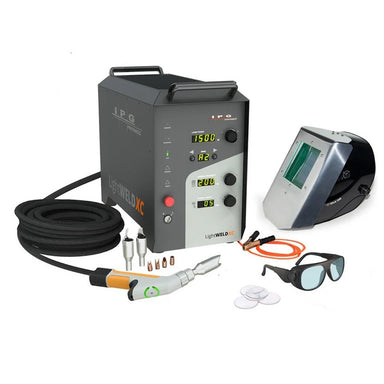
A smarter, faster way to weld and clean with the 1500 XC Laser Welder Machine IPG LightWELD brings the best of modern laser welding and cleaning in...
View full details
Save $-33,000.00
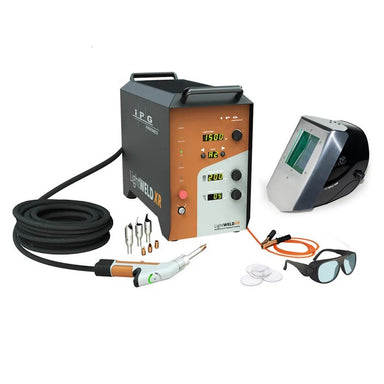
IPG LightWELD 1500 XR Handheld Laser Welder — Revolutionize Your Welding Experience The IPG LightWELD 1500 XR Handheld Laser Welder brings unmatche...
View full details
Save $-22,500.00
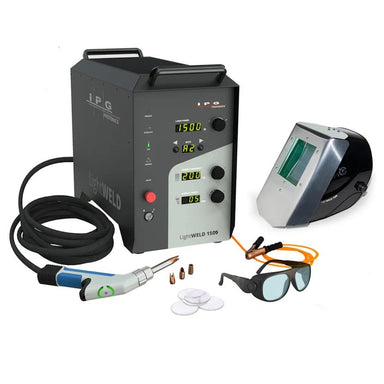
Unleash Industrial Power and Precision with the IPG LightWELD 1500 The LightWELD 1500 Handheld Laser Welding System delivers unmatched power, preci...
View full details
Save $-18,000.00
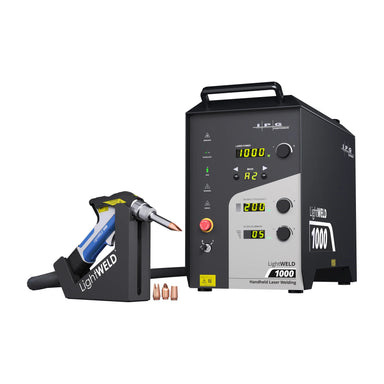
Cut Faster, Weld Cleaner, and Boost Productivity with the IPG LightWELD 1000 The LightWELD 1000 Handheld Laser Welding System is changing the game...
View full detailsArgon is the recommended shielding gas for laser welding stainless steel in most applications. Argon is inert, meaning it does not react with the chromium in stainless steel and prevents the oxidation and discoloration that contaminates the weld pool when welding without gas coverage. A flow rate of15–25 L/min through the welding nozzle is typical for most handheld applications. Nitrogen is sometimes used as a lower-cost alternative on mild or carbon steel, but on stainless it can cause nitriding of the weld metal which reduces corrosion resistance — stick with argon for stainless work where appearance and corrosion performance matter.
The practical thickness ceiling for handheld fiber laser welders depends on machine power. A700W machine handles stainless steel from 0.5mm to approximately 2mmreliably in a single pass. A1000–1200W machine covers 0.5mm to 3mm, which is the sweet spot for most fabrication, kitchen equipment, and architectural work. Going to 1500W+ extends the range to 4–5mm. For material above 3mm that requires structural integrity, always verify with a cross-section test weld before running production.The sweet spot for handheld stainless steel laser welding is 0.8mm to 2.5mm, where the process is most forgiving and weld quality is consistently excellent.
Some heat tint on stainless steel laser welds is normal and does not indicate a bad weld. The color sequence — gold, blue, grey — reflects increasing oxidation levels at the weld surface.Gold tint is acceptable; blue or grey indicates insufficient gas coverage or contamination.To minimize heat tint: increase your argon flow rate, ensure the nozzle tip is clean and correctly positioned, eliminate any drafts in the work area that disturb the gas shield, and clean the workpiece surface with acetone before welding. Thelaser cleaning functionon 3-in-1 machines can remove post-weld discoloration in seconds without abrasives. If tint persists despite good gas coverage, check your shielding gas purity — low-purity or contaminated gas cylinders are a common culprit.
Not always. Autogenous (no filler) laser welding works well on stainless steel when joint fit-up is tight — meaning the gap between mating surfaces is under 0.1mm. With tight fit-up and good surface cleanliness, autogenous welds on 304 and 316 stainless produce strong, clean joints without filler. Filler wire is necessary when bridging a gap, adding material to a joint, or reinforcing thicker welds. For 304 stainless, useER308 wire; for 316 stainless, useER316L wire. These match the base metal's chromium and nickel composition, preserving corrosion resistance at the joint.
Continuous wave (CW) mode is the standard for most stainless steel seam welding — it produces a consistent bead width and penetration depth at production speeds and is the best choice for long straight runs on 1mm+ stainless. Pulse mode is preferable for thin-gauge stainless under 0.8mm, work near edges and corners where burn-through risk is highest, and decorative work where the "stack of dimes" bead appearance is desired. Most users doing production stainless work stay in CW mode; pulse is the refinement tool for specific situations. If you have wobble (oscillation) capability on your machine, enable it for stainless — it improves bead consistency and is more forgiving of minor travel speed variation.
Shipping Insurance ($89)