Back to School SALE Prices - Last Few Days!
Skip to content

Filters

Fume Extractors

Fume extractors help create cleaner, safer workspaces by removing smoke, airborne particles, and harmful fumes generated during laser engraving, laser cutting, welding, soldering, UV printing, and other fabrication processes. Whether you're operating a desktop laser engraver in a home studio or managing production equipment in a commercial shop, a reliable fume extraction system is essential for improving air quality, protecting equipment, and maintaining a more comfortable working environment.

Our collection of fume extractors includes compact portable units, high-performance filtration systems, and industrial-grade air purification solutions designed for makers, educators, small businesses, and manufacturing environments. From laser fume extractors for acrylic and wood engraving to advanced systems capable of handling metal marking and welding applications, these units are selected for their filtration performance, reliability, and ease of integration with modern fabrication equipment. If you're looking for a fume extractor that delivers efficient airflow, multi-stage filtration, and dependable long-term operation, you'll find the right solution here.

Shop Fume Extractors for Laser Engraving, Welding, Soldering & Clean Air Filtration

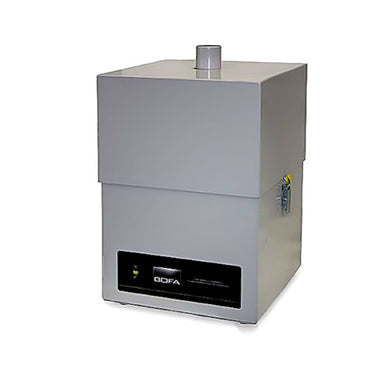
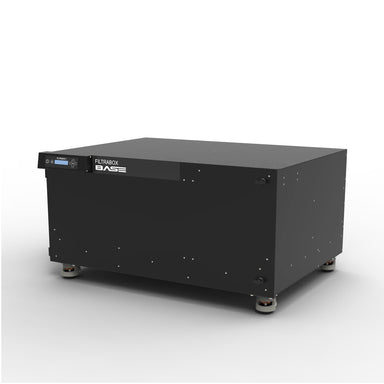
  • Filtrabox Base Laser Fume Extractor Size View
    Save $105.00
    Filtrabox Filtrabox Base Laser Fume Extractor
    Original Price $5,000.00
    Current Price $4,895.00

    Your Fume Extractor and Your Laser Stand. One Machine. The Filtrabox Base is a professional-grade 3-stage laser fume extractor that replaces your l...

    View full details
    Original Price $5,000.00
    Current Price $4,895.00
    Save $105.00
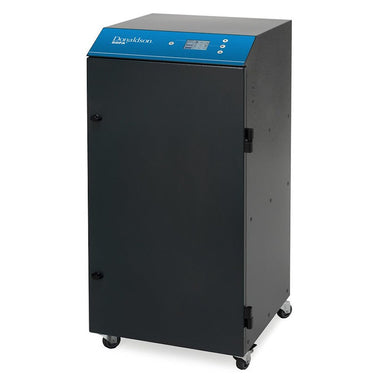
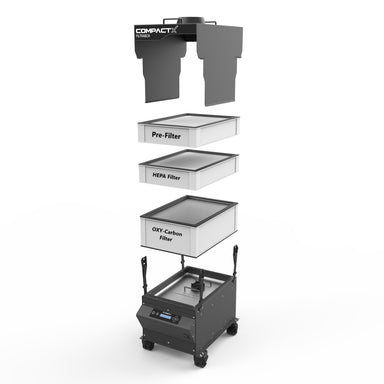
  • Filtrabox Compact X Laser Fume Extractor Front View
    Save $925.00
    Filtrabox Filtrabox Compact X Laser Fume Extractor
    Original Price $4,800.00
    Current Price $3,875.00

    Professional-Grade Laser Fume Extraction in the Most Compact Filtrabox Yet. The Filtrabox Compact X is a portable 3-stage laser fume extractor desi...

    View full details
    Original Price $4,800.00
    Current Price $3,875.00
    Save $925.00
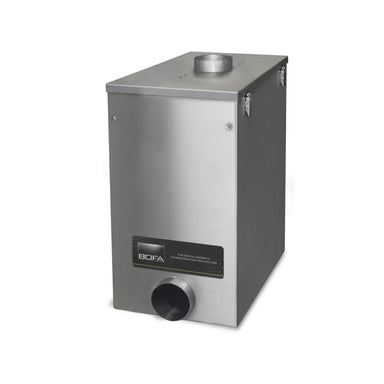
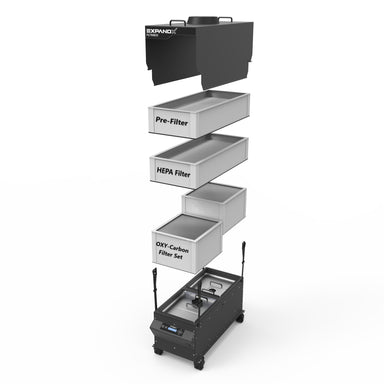
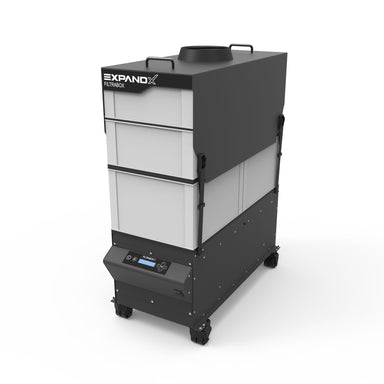
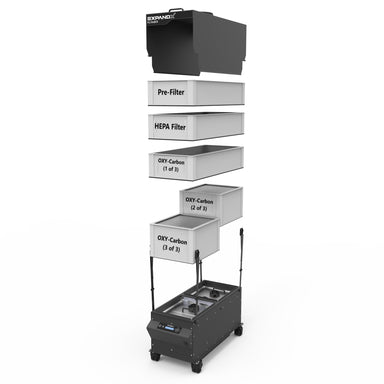
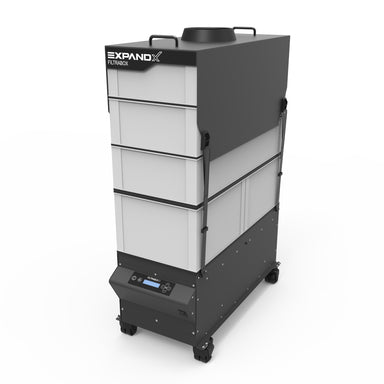
  • Filtrabox Expand X-3 Laser Fume Extractor Side On View
    Save $2,750.00
    Filtrabox Filtrabox ExpandX-3 Laser Fume Extractor
    Original Price $12,000.00
    Current Price $9,250.00

    When Two Blowers Aren't Enough, This Is the Answer. The Filtrabox ExpandX-3 is the maximum-capacity configuration in the ExpandX platform — three d...

    View full details
    Original Price $12,000.00
    Current Price $9,250.00
    Save $2,750.00
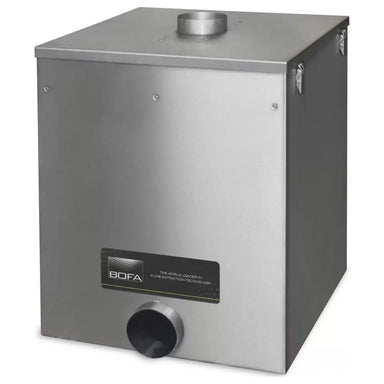
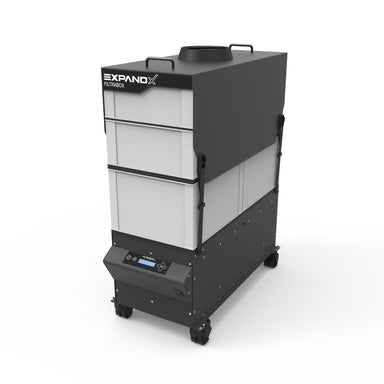
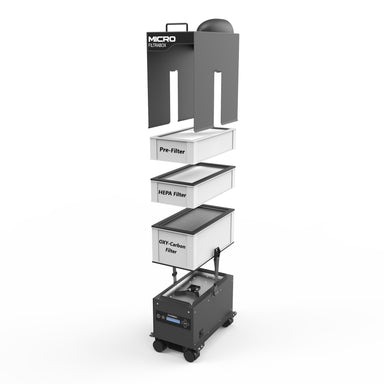
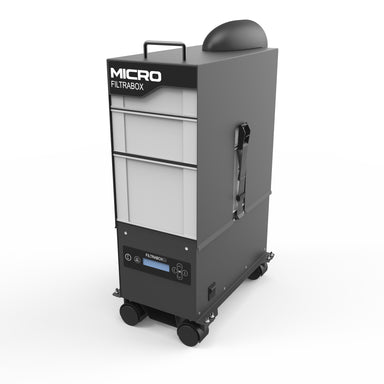
  • Filtrabox Micro Laser Fume Extractor side on view
    Save $505.00
    Filtrabox Filtrabox Micro Laser Fume Extractor
    Original Price $2,500.00
    Current Price $1,995.00

    The Under-Desk Laser Fume Extractor With Professional Filtration in a 10-Inch-Wide Cabinet. The Filtrabox Micro is a portable 3-stage laser fume ex...

    View full details
    Original Price $2,500.00
    Current Price $1,995.00
    Save $505.00

Frequently Asked Questions

Do I need a fume extractor for a laser cutter?

Yes — laser cutting and engraving release smoke, VOCs, and fine particulates that a fume extractor pulls away from the workpiece and filters before releasing air back into the room, and ordinary room ventilation can't clear those fumes fast enough on its own. Materials like acrylic, MDF, and coated woods release especially strong odors and airborne particulate when cut, and without active extraction that smoke settles on nearby surfaces and lingers in the air long after the job finishes. A fume extractor also protects the laser itself, since smoke residue that isn't pulled away can build up on the lens and mirrors and degrade cut quality over time. It's considered essential equipment for any laser run indoors, not an optional upgrade.

How often should fume extractor filters be replaced?

Under normal daily use, expect to replace filters every 1 to 3 months, with pre-filters needing attention weekly since they catch the bulk of the debris first. How fast filters load up depends heavily on what's being cut — acrylic and MDF produce more odor and particulate than wood or leather, so shops running those materials daily should plan on the shorter end of that range. Letting a saturated filter run past its useful life reduces suction and lets more smoke escape into the room. Keeping a spare filter on hand and checking airflow weekly is the easiest way to avoid a gap in extraction.

Can I vent my laser cutter outside instead of using a fume extractor?

Venting outside works only with a permanent duct run to an exterior wall, while a standalone fume extractor lets you filter and recirculate air indoors — the only practical option in apartments, rented shops, or spaces without exterior access. Exterior venting also means losing conditioned air to the outside every time the laser runs, which adds up in heating and cooling costs over a full year of regular use. A ducted setup can still clear smoke more completely for high-volume cutting, but it requires wall penetration, ductwork, and often landlord approval that a self-contained extractor skips entirely. Many shops end up running a hybrid: light filtration extraction for engraving jobs and a duct booster fan for heavier cutting sessions.

What's the difference between a fume extractor and an air purifier?

A fume extractor uses a capture hood or ducted intake positioned close to the laser to pull fumes at the source, while a standard air purifier only cleans ambient room air after fumes have already dispersed. That distinction matters because smoke and VOCs are far easier to capture in a concentrated stream right at the workpiece than once they've spread and diluted across an entire room. Fume extractors are also built with denser carbon and HEPA stages rated for the higher VOC load laser cutting produces, whereas most air purifiers are designed for household dust and allergens. Using an air purifier alone typically leaves a lingering smoke smell and higher particulate exposure near the machine.

How many CFM do I need for a laser fume extractor?

For most desktop laser engravers, 100 to 200 CFM is sufficient, while industrial or high-power CO2 and fiber systems need 300+ CFM to keep pace with heavier smoke output. The right number also depends on duct length and the number of bends in the line, since every foot of ducting and each elbow adds airflow resistance that reduces the effective CFM reaching the machine. Cutting dense or heavily coated materials produces thicker smoke that needs more airflow to clear quickly than light engraving passes on wood or paper. When in doubt, sizing up rather than down gives more headroom for future upgrades to a higher-wattage laser.

Skip the AI. Call an Expert. Skip the AI. Call an Expert.