Save $400.00
The Xlaserlab X1 Pro: A Handheld Laser Welder That Combines Four Tools in One Weld stainless steel, aluminum, and carbon steel with professional ...
View full detailsAuto body welding is one of the most demanding thin-sheet-metal applications in fabrication — and the one where MIG welding's heat input causes the most damage. Welding a patch panel, closing a rust hole, or joining thin gauge body steel with a MIG creates heat distortion that pulls the surrounding metal out of flat, requiring hours of hammer-and-dolly work, filler applications, and sanding to recover. A handheld fiber laser welder eliminates this problem at the source: the focused beam's narrow heat-affected zone means body panels stay flat, adjacent metal stays undisturbed, and the weld area requires minimal or no grinding to blend. For any shop working on classic car restoration, custom body fabrication, panel replacement, or collision repair on thin-gauge steel, laser welding is the upgrade that changes everything.
The most common auto body applications for laser welding include patch panel installation (both plug welds and seam welds), floor pan repairs, quarter panel attachment, rocker panel welding, thin-wall exhaust fabrication, and custom body modifications requiring precise, low-distortion joins on complex curved surfaces. Pulse mode is especially valuable for auto body work — it limits heat accumulation between weld points and prevents burn-through on the thin 18–22 gauge steel common in body panels. Our machines handle galvanized body steel, mild steel, and stainless exhaust material in the thickness ranges typical for automotive work. Book a free consultation for auto body applications.
Save $400.00
The Xlaserlab X1 Pro: A Handheld Laser Welder That Combines Four Tools in One Weld stainless steel, aluminum, and carbon steel with professional ...
View full details
Sale
xTool MetalFab: One Machine. A Complete Metal Workshop. Weld, Cut, Clean, and Engrave — All with Industrial-Grade Fiber Laser Precision. The xTool...
View full details
Save $1,000.00
Cut Faster, Weld Cleaner, and Work Anywhere with the Gweike Gweike 3-in-1 Handheld Laser Welder. The Gweike 3-in-1 Handheld Laser Welder redefines ...
View full details
Save $-3,699.00
The Xlaserlab X1: The Lightest, Most Accessible Handheld Laser Welder for Thin Metal Work Clean, precise welds on stainless steel, carbon steel, b...
View full details
Save $1,000.00
Cut Faster, Weld Cleaner, and Work Anywhere with the Gweike Gweike 3-in-1 Handheld Laser Welder. The Gweike 3-in-1 Handheld Laser Welder redefines ...
View full details
Save $-39,000.00
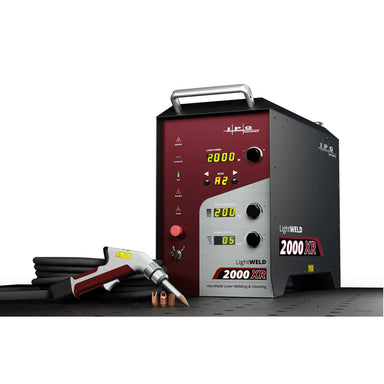
Experience unmatched speed, precision, and cleaning power with the IPG LightWELD 2000 XR Handheld Laser Welder With the LightWELD 2000 XR Handheld ...
View full details
Save $-27,750.00
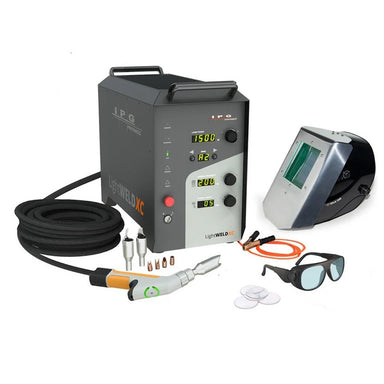
A smarter, faster way to weld and clean with the 1500 XC Laser Welder Machine IPG LightWELD brings the best of modern laser welding and cleaning in...
View full details
Save $-33,000.00
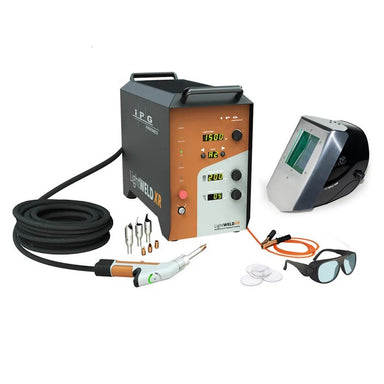
IPG LightWELD 1500 XR Handheld Laser Welder — Revolutionize Your Welding Experience The IPG LightWELD 1500 XR Handheld Laser Welder brings unmatche...
View full details
Save $-22,500.00
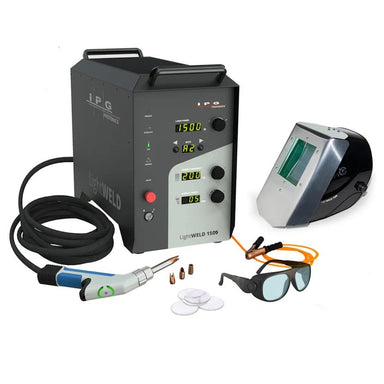
Unleash Industrial Power and Precision with the IPG LightWELD 1500 The LightWELD 1500 Handheld Laser Welding System delivers unmatched power, preci...
View full details
Save $-18,000.00
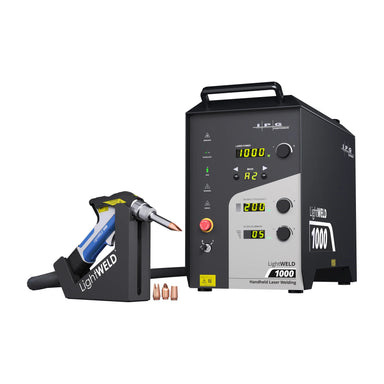
Cut Faster, Weld Cleaner, and Boost Productivity with the IPG LightWELD 1000 The LightWELD 1000 Handheld Laser Welding System is changing the game...
View full detailsSignificantly less than MIG, and often not at all with proper technique. Heat distortion in body panels is caused by high heat input spread over a large area — exactly what MIG welding produces. Laser welding's concentrated beam delivers heat to a fraction of the area in a fraction of the time, resulting in a heat-affected zone that is typically 80–90% narrower than MIG. On 18–20 gauge auto body steel — the most common body panel thickness — a properly executed laser seam weld with adequate clamping and correct travel speed produces panels that stay flat with no hammer-and-dolly recovery required. The key inputs: clamp the panel tightly to a flat surface before welding, use pulse mode on the thinnest gauges, and skip-weld rather than running continuous long seams on large panels.
Yes — spot mode on a fiber laser welder is ideal for plug welding body panels. Plug welds (welding through a hole in the top panel into the lower flange) are the standard method for attaching replacement body panels to floor pans, rockers, and flanges. Laser spot mode concentrates the energy at a single point, fusing through the top panel into the underlying metal with less heat spread to the surrounding panel than either MIG spot welds or conventional plug welds. The result is a plug weld that holds as strongly as MIG while leaving the surrounding paint, primer, and metal largely undisturbed. For collision repair shops and restoration builders doing panel replacement, laser spot welding is the cleanest and fastest method available.
For auto body applications, the ideal laser welder is air-cooled for portability, 700W to 1200W for the thin-gauge body steel range, and includes a 3-in-1 function so the laser cleaning mode can be used for rust and weld discoloration removal. The Xlaserlab X1 Pro is our most recommended machine for auto body work — its 700W fiber laser handles 0.5mm to 3mm (covering all common body panel thicknesses), the air-cooled design means no chiller to manage in the shop, and the 3-in-1 functionality lets you prep surfaces with the cleaning mode and cut small patch blanks with the cutting mode, all on the same machine. For restoration shops doing high-volume production, the Gweike 1200W adds more power headroom for thicker sections like rocker panels and structural floor pans.
Yes — modern automotive body steel is zinc-coated (galvanized or galvannealed) and laser welding handles it well. The zinc coating on automotive body steel is thinner than heavy structural galvanizing, which means less zinc volatilization at the weld zone. Some shops lightly sand or grind the immediate joint area to remove zinc before welding, then apply zinc-rich primer to the finished weld — this is the cleanest approach for structural repairs. For cosmetic work on galvanized body panels, welding over the coating with adequate gas shielding and accepting the minor porosity characteristic of galvanized welding is also common practice in body shops. Always ensure ventilation when welding any zinc-coated automotive steel — the same zinc oxide fume risk applies regardless of material thickness or coating weight.
The same principles that govern weld-through primer use in conventional body repair apply to laser welding: for lap joints and flanged seams where the joint surfaces are hidden after welding, a weld-through zinc primer on the mating surfaces before assembly is the correct corrosion protection practice. For butt-welded patch panels where both sides of the joint are accessible after welding, cleaning and priming the weld area post-weld is sufficient. Laser welding's narrower heat-affected zone means less weld-through primer is burned off during the weld than with MIG — there is less contamination from primer combustion products in the weld pool, which is a practical advantage for shops who use weld-through primer on all panel joints as a standard practice.
Shipping Insurance ($89)