75-day Returns - Buy With Confidence!
Skip to content

Filters

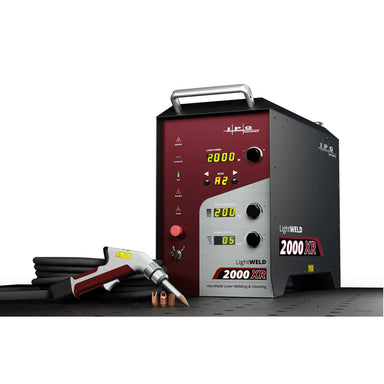
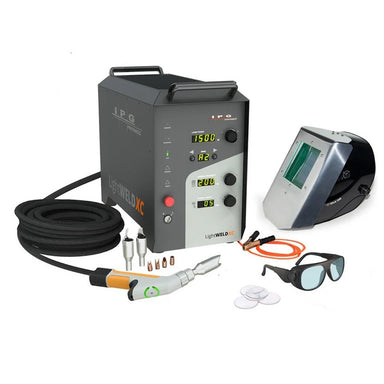
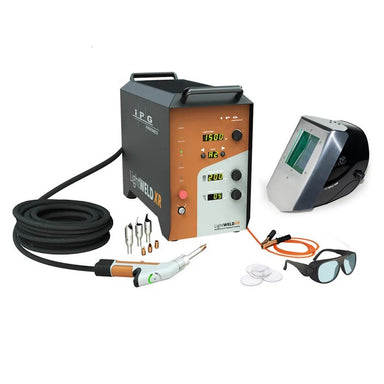
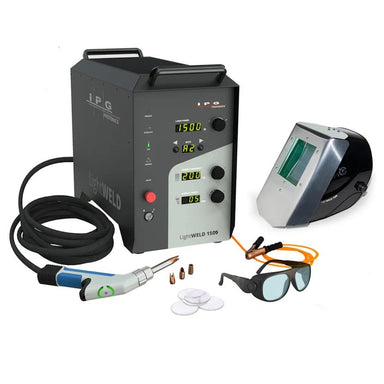
Laser Welders for Metal Fabrication

Metal fabrication shops are built on speed, quality, and the ability to deliver consistent results across every production run. A handheld fiber laser welder improves all three simultaneously: travel speeds of 2–10x faster than TIG on thin-to-medium material directly increase throughput; the narrow heat-affected zone reduces distortion and the grinding, straightening, and polishing labor that follows it; and the machine's repeatable parameter presets deliver consistent bead appearance across every operator and every shift. For shops producing stainless steel furniture, custom railings, architectural metalwork, enclosures, brackets, and precision assemblies, the productivity gains are immediate and significant.

The right laser welder for a fabrication shop depends on your primary material, maximum thickness, and production volume. For shops primarily doing stainless and carbon steel up to 3mm, the Xlaserlab X1 Pro or Gweike machines cover the full range with air-cooled portability. For heavier production on thicker material or aluminum, higher-wattage options deliver the power margin and duty cycle needed. Our team works with fabrication shops at every production scale — from solo operators to shops running multiple shifts — and can advise on the right machine, pack configuration, and support structure for your operation. Book a free consultation to discuss your specific fabrication needs.

Shop Laser Welders for Metal Fabrication — Fiber Laser Welding Machines for Fab Shops

Frequently Asked Questions

How does laser welding improve throughput in a fabrication shop?

Laser welding improves fab shop throughput through three compounding mechanisms. First, travel speeds 2–5x faster than TIG on thin-to-medium material reduce the time at the welding station directly. Second, the near-elimination of post-weld grinding and polishing — which on TIG work typically accounts for 30–50% of total job time on visible stainless — removes an entire production step for many jobs. Third, the shorter learning curve enables non-specialist operators to produce quality welds, freeing your skilled TIG welders for the work that genuinely requires their expertise. For a shop running 40+ hours per week of stainless or aluminum welding, the productivity improvement from transitioning primary thin-gauge work to laser is typically dramatic and pays back the machine investment quickly.

What joint types does a laser welder handle in fabrication work?

Handheld fiber laser welders handle all standard fabrication joint types: butt joints, lap joints, corner joints, T-joints, fillet welds, and edge joints. The nozzle kit included with most machines provides specific tip geometries for each joint type — flat nozzles for butt and lap joints, angled tips for inside corners, and fillet tips for T-joints. The main constraint versus MIG is joint fit-up tolerance: laser requires tighter fit-up (under 0.3mm gap for most applications) than MIG, which means jigging and fixturing quality directly impacts weld quality. For shops with good fixturing and consistent joint preparation, laser handles every joint type MIG or TIG does — often with better results on visible faces.

Can a laser welder handle repetitive production runs?

Yes — and this is one of the strongest arguments for laser welding in a production fab context. The parameter preset storage on modern handheld laser welders allows you to save material-specific and thickness-specific settings (power, wire speed, pulse frequency, gas flow) as named presets that operators can recall instantly. Combined with consistent fixturing, this means every weld on a production run is executed at identical parameters — eliminating the operator-to-operator and shift-to-shift variation that is common with TIG. For shops producing the same part in batches — enclosures, brackets, furniture components, railing sections — the repeatability of laser welding is a genuine competitive advantage in both quality consistency and pricing.

When should a fabrication shop keep MIG alongside a laser welder rather than replacing it?

Laser welding and MIG are best treated as complementary tools in a fab shop rather than direct replacements. Keep MIG for: material above 3mm where laser's single-pass penetration limit is exceeded; structural carbon steel work with large gaps or sloppy fit-up where MIG's bridge-building capability is needed; outdoor and field welding where the infrastructure requirements of laser (gas supply, electrical) are impractical; and flux-core outdoor work on dirty or painted metal. Use laser welding for: all thin-to-medium stainless and aluminum work; visible seams requiring minimal post-processing; precision assemblies; on-site work where portability matters; and any application where heat distortion is a quality concern. Most shops find laser handles 60–80% of their work volume after the transition period, with MIG retained for the heavy and field-welding remainder.

What are the cleaning and maintenance requirements for a laser welder in a production shop?

Fiber laser welders are genuinely low-maintenance compared to traditional welding equipment — the laser source itself requires no consumable replacement under normal use and has a lifespan exceeding 100,000 hours. The primary maintenance tasks are: clean the protective lens window weekly with anhydrous alcohol and lint-free swabs — spatter contamination on the lens reduces power at the workpiece and degrades weld quality; inspect and replace copper nozzle tips when wear affects gas coverage (typically every few weeks at production volume); and for air-cooled machines, clean cooling fan intakes of metal dust and debris monthly. Water-cooled machines additionally require cooling water quality checks and replacement every 3 months. Total maintenance time for a production shop is typically 15–30 minutes per week — negligible compared to the grinding wheels, gas nozzles, contact tips, and liner replacements that MIG welding consumes.