75-day Returns - Buy With Confidence!
Skip to content

Filters

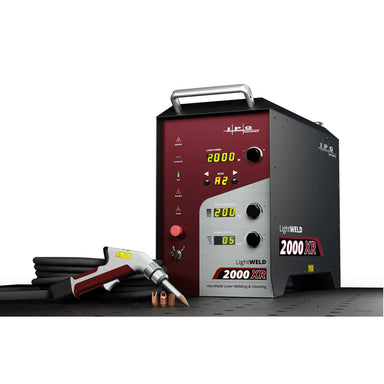
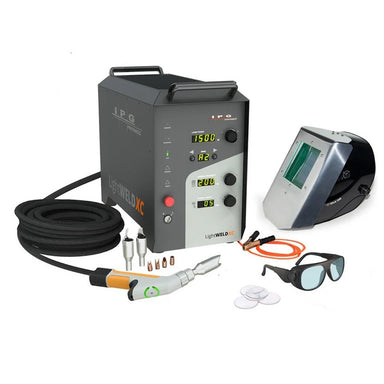
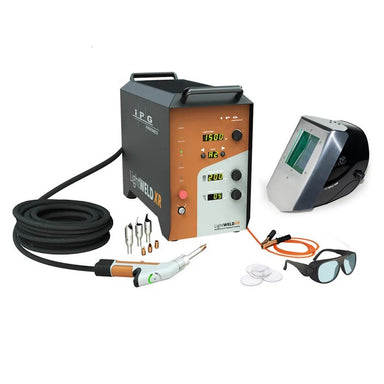
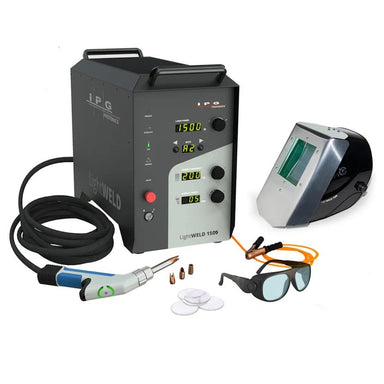
Laser Welders for Carbon Steel

Carbon steel and mild steel form the backbone of most fabrication shops — frames, brackets, fixtures, structural components, and general metalwork. A handheld fiber laser welder handles carbon steel with the same core advantages it delivers on stainless: faster welding speeds, reduced heat distortion, less post-weld grinding, and a shorter learning curve than TIG. On carbon steel specifically, laser welding pairs with nitrogen shielding gas as a cost-effective alternative to argon, making ongoing consumable costs lower than on stainless or aluminum applications. The result is clean, strong welds on mild steel that rival or exceed MIG quality, with 2–5x the travel speed of TIG on comparable material thicknesses.

For carbon steel up to 3mm, a handheld fiber laser welder produces full-penetration welds in a single pass with minimal spatter and excellent bead consistency. The continuous welding mode is ideal for longer carbon steel seams where speed matters, while pulse mode handles thinner gauges and heat-sensitive assemblies. Our machines are compatible with carbon steel wire in the 0.8mm to 1.6mm diameter range for filler-assisted joining on joints that require additional material. Unsure which machine handles carbon steel best at your specific thickness range? Our team can advise — book a free consultation before you buy.

Shop Laser Welders for Carbon Steel — Fiber Laser Welding Machines for Mild & Carbon Steel

Frequently Asked Questions

What shielding gas should I use for laser welding carbon steel?

Nitrogen is the most cost-effective shielding gas for laser welding carbon and mild steel and produces clean, acceptable welds for most structural and fabrication applications. Argon is also compatible and produces slightly better weld bead appearance, but at meaningfully higher cost. For visible or cosmetic carbon steel work where appearance matters, argon is worth the premium. For structural and high-volume production work where surface aesthetics are secondary, nitrogen delivers excellent results at lower running cost. Flow rates of 15–20 L/min are typical for both gases on carbon steel. Avoid CO2 as a primary shielding gas on laser welders — it is appropriate for MIG but can cause carbon absorption at the weld metal surface in laser welding.

Can a laser welder replace my MIG welder for carbon steel fabrication?

For carbon steel up to 3mm, laser welding is a genuine MIG replacement that produces faster and cleaner results with less post-processing. Above 3mm, the two tools work best in combination: use laser welding for thin sheet, visible seams, and precision assemblies; keep MIG or stick for heavy structural work, thick plate, and outdoor field welding where laser's portability and infrastructure requirements are less practical. The realistic summary: laser welding replaces MIG for 60–80% of what most small and medium fab shops do, and complements it rather than replacing it entirely for the heavy end of the work.

Do I need to remove mill scale or rust before laser welding carbon steel?

Surface preparation requirements for carbon steel laser welding are less strict than for aluminum but more important than for stainless. Heavy mill scale, rust, oil, and paint all degrade weld quality by introducing contamination into the weld pool and disrupting the shielding gas layer. Light mill scale on hot-rolled steel can usually be welded through with some parameter adjustment, but clean metal always produces better results. For any work where weld quality matters, clean the joint area with a grinder or flap disc, or use the laser cleaning function on 3-in-1 machines to prep the surface in seconds without abrasives. This is one of the most underutilized time-savers in shops that have a 3-in-1 machine.

What filler wire should I use for carbon and mild steel?

For most carbon and mild steel laser welding, ER70S-2 or ER70S-6 wire in 0.8mm or 1.0mm diameter is the standard choice. ER70S-6 has higher silicon and manganese content, giving it better wetting and tolerance for mill scale — making it the preferred choice when working on carbon steel that is not perfectly clean. ER70S-2 is a triple-deoxidized wire for cleaner base metals and slightly lower spatter. For joints under 1mm thickness, autogenous (no filler) welding is often preferable as the narrow bead and minimal filler volume reduces the risk of cold-lap at the toes. Move to 0.8mm wire when material is 1mm or above and joint gap requires fill.

Is laser welding carbon steel as strong as MIG welding?

Yes — properly executed laser welds on carbon steel match or exceed MIG weld strength in tensile and shear testing. The narrower weld bead and smaller heat-affected zone of laser welding actually produce a more favorable microstructure in many cases, with less grain growth and fewer residual thermal stresses than MIG. The critical variable is joint fit-up: laser welding requires tighter fit-up than MIG (gaps over 0.3mm on thin material cause incomplete fusion), so joint preparation quality directly determines weld quality. A well-fit, clean laser weld on carbon steel will pass bend tests and destructive testing that meet or exceed AWS D1.1 structural requirements for equivalent thickness.