Nov 9 - 30: Free Lightburn Pro with every laser > $2,000* | 75-day Extended Returns
Nov 9-30: Free Lightburn Pro with every laser > $2,000*
Skip to content

Filters

Laser Welding Safety & Fume Extraction

Laser welding looks calmer than MIG or TIG, but the hazard is invisible: handheld fiber lasers emit 1070nm infrared light that a standard welding helmet doesn't stop. Every operator and bystander needs laser safety eyewear rated OD7+ at 1070nm, ideally under a laser-rated welding helmet. Welding also releases metal fumes, especially from galvanized steel, brass and coated parts.

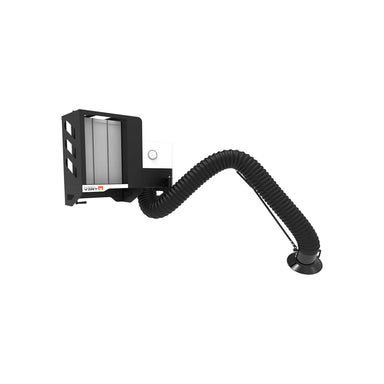
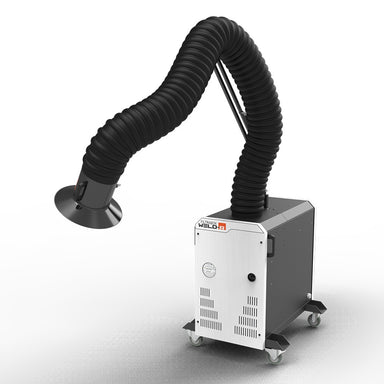
At The Maker's Chest, our laser welding fume extractors include the Filtrabox Weld-R, Vert-X and Nomad and Fume Dog's portable, wall-mount and spot extractors. They capture fumes at the source so your shop stays clear without opening doors in winter. If you're setting up a laser welding cell, we'll help you size extraction to your machine and materials. Our laser welding safety guide covers eyewear, helmets, curtains and controlled areas.

What Safety Equipment Do You Need for Laser Welding?

Frequently Asked Questions

What safety glasses do I need for laser welding?

For handheld fiber laser welding, wear laser safety eyewear rated Optical Density 7 or higher at about 1070nm, the wavelength these machines emit. The rating must be printed on the frame or lens for that wavelength; tinted safety glasses and sunglasses offer no protection. Bystanders in the laser controlled area need the same rating. Check your welder's manual, since some machines specify OD8 or higher for their exact wavelength range.

Can I use a regular welding helmet for laser welding?

No, not on its own. A standard auto-darkening welding helmet is designed for arc light, not 1070nm infrared laser radiation, so it gives essentially no protection from the laser beam itself. Use a laser-rated welding helmet over OD7+ laser safety glasses. The helmet still adds value against sparks, spatter and the bright visible light from the weld pool, which laser glasses alone don't fully block.

Do I need fume extraction for laser welding?

Yes. Laser welding produces less smoke than MIG, but it still vaporizes metal into fine particles, and zinc from galvanized steel or brass, chromium from stainless and coatings on painted parts are hazardous to breathe. Source capture at the weld is the most effective control, using an extractor with a HEPA stage and arm or hood placed near the joint. Portable units suit mobile work; wall-mount systems suit a fixed welding cell.

Skip the AI. Call an Expert. Skip the AI. Call an Expert.