

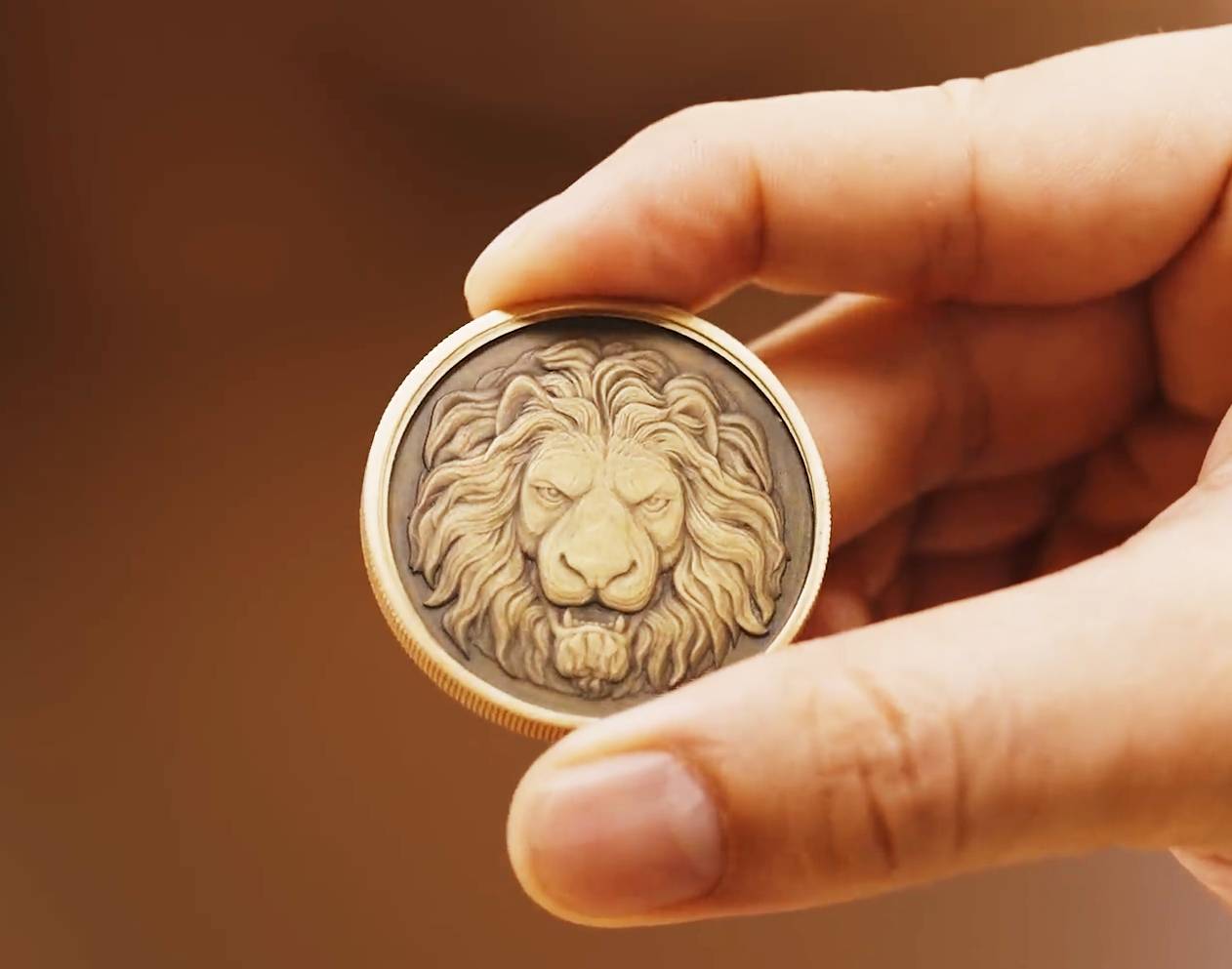
Last updated June 2026. Based on the questions we hear from hobbyists and small business owners exploring this niche, the short answer is yes — you can make challenge coins and custom coins with a laser engraver, the learning curve is gentler than most people expect, and there's real money in it if you position correctly. This is the complete guide: how laser engraving compares to traditional minting, exactly what equipment to buy, real settings, the genuine learning curve, realistic pricing and margins, and the legal questions that actually matter.

Challenge coins started in the military as a way to prove membership and build camaraderie — the tradition holds that carrying your unit's coin and being able to produce it on demand (the "coin check") proves belonging. Over decades the tradition spread well beyond the military into police forces, fire departments, corporations, sports teams, and hobby groups. What every challenge coin shares, regardless of origin, is meaning — a unit emblem, a team logo, a mark of recognition for service or achievement — and a laser engraver reproduces that detail just as faithfully as traditional die-striking, without the tooling cost that makes small custom runs expensive through a traditional minter.
The classic coin metals — brass, copper, aluminum, stainless steel, and various zinc alloys — all engrave cleanly with a fiber laser, supporting fine detail down to micro-text, fine line art, and even scannable QR codes etched directly into the metal surface. The finished look from a laser is genuinely different from a traditionally struck coin (more on that distinction below), but for personalized, small-run, or rapidly-iterated designs, laser engraving is frequently the better tool for the job, not just the cheaper one.

Traditional coin production requires a custom die or mold — a hardened steel tool, typically machined or hand-engraved, pressed into a coin blank under enormous pressure to physically deform the metal into a raised (relief) design. Dies are expensive to produce, often running into the hundreds or low thousands of dollars depending on design complexity, which only makes economic sense once you're ordering enough coins to spread that tooling cost across. This is why traditional minters typically have minimum order quantities — the die cost has to be amortized.
Laser engraving needs no tooling at all. You can produce a single coin or a production run of hundreds on the same machine, using the same setup, with no upfront die cost. Better still, you can tweak the design in software between runs — fix a typo, adjust spacing, swap a logo — without paying for a new die or waiting on a die-maker's turnaround time. This makes laser engraving the clear winner for prototyping, one-off custom orders, and any situation where the design might need to change.
The trade-off is in the physical result. Laser engraving marks the surface — it doesn't deform the metal, so it won't produce the deep, three-dimensional embossed relief of a traditionally struck coin, where the design genuinely stands proud of (or recessed into) the coin's surface. A laser-engraved coin reads more like fine surface artwork: crisp lines, photographic detail, color-fill possibilities through different power settings — genuinely different from a struck coin, not simply a lesser version of one. For some buyers, particularly traditionalist military or veteran audiences who expect the heft and relief of a classic struck coin, this matters. For corporate recognition tokens, collector pieces, or personalized gifts, the laser-engraved look is often preferred specifically because of the photographic-level detail it makes possible.
Fiber lasers are the right tool for coin engraving — their wavelength (typically 1064nm) is well absorbed by metal, and they cut cleanly into brass, steel, and aluminum, which is exactly the material range challenge coins use. Diode lasers are affordable but underpowered for raw metal coins without using specialized marking sprays that add a chemical step to the process. UV lasers excel on plastics, glass, or coated items, but aren't the right primary tool for raw metal coins, even though some UV machines can mark certain coated metal surfaces.
For coins specifically, aim for a 30W–60W fiber laser. A 20W machine can manage light surface etching but will struggle with deeper relief-style marking or larger production runs; more power genuinely saves time on both depth and throughput. We've reviewed several fiber lasers in this exact power range in detail — see our 5 best laser engravers for challenge coins for specific model recommendations and current pricing.
Coins are small, round, and genuinely prone to shifting under the beam — a proper fixture or jig isn't optional equipment, it's the difference between a clean production run and a pile of misaligned coins. A simple recessed jig that holds the coin flat and centered is the minimum; for production volume, a jig that holds multiple coins at once in a fixed grid saves significant setup time per piece. A rotary attachment is worth adding once you want to engrave coin edges or wrap a design around the coin's curved rim — it keeps the coin aligned and rotating in sync with the laser as it marks around the circumference.

Settings vary by metal, but the general principle holds across coin materials: lower power with multiple passes produces cleaner, more controllable results than a single high-power pass, especially for fine detail like small text or intricate crests. Brass and copper, being relatively soft, mark cleanly at moderate power; stainless steel requires more power and often benefits from a slightly slower speed to achieve the same contrast. For color-marking effects (a technique where laser parameters are tuned to produce different oxide colors on stainless steel rather than simple engraving), you'll need a MOPA fiber laser specifically — standard Q-switched fiber lasers can't achieve the same controlled color range.
A typical production workflow for a batch order looks like this: finalize the design in your design software, set up the jig with the first coin, run a single test piece at your baseline settings, inspect under good light for contrast and depth, adjust if needed, then run the full batch with the confirmed settings. For larger orders, periodically re-checking focus and a sample piece partway through the run catches any drift before it affects a large portion of the batch.

Based on what we hear from customers picking this up for the first time, coin engraving looks more intimidating than it actually is. The fundamentals come down to two things: software (LightBurn or EZCAD for designing and importing patterns onto the laser) and machine handling (dialing in speed, power, and focus for your specific coin metal). Most modern fiber lasers ship with preloaded templates and auto-focus tools, which removes a real chunk of the early trial and error that used to define this skill.
The genuine skill ceiling sits higher than the entry point, though. Rotary attachments for curved or edge engraving take real practice to use smoothly — getting the rotation speed synced correctly with the laser's marking speed so the design wraps evenly around a coin's edge is a learned skill, not something that works perfectly the first time. Finishing techniques are what separate a competent first attempt from a piece that looks genuinely professional: polishing the engraved coin for a bright shine, or applying patina or paint fill into the engraved recesses for stronger contrast, both add a visible step up in perceived quality that customers notice immediately, even if they can't articulate why one coin looks more "finished" than another.
The most common early hurdle is setup and calibration — aligning the laser and figuring out exactly where a design will land on a small, round coin, especially when the design needs to be centered precisely. Running test passes on scrap metal discs before committing to real material solves this almost entirely, and most people get comfortable within their first handful of sessions rather than needing weeks of practice.
One safety note worth taking seriously, not as an afterthought: engraving metal coins produces metal dust and fumes, and depending on the metal and any coatings, those fumes can include substances you genuinely don't want to breathe regularly. A proper exhaust fan or fume extractor, plus safety goggles, isn't optional gear — treat coin engraving with the same safety discipline you'd apply to any other metalworking process.
Coin pricing varies meaningfully by complexity: a simple engraved coin (basic text or a single-color logo) typically runs $5–$10, while larger pieces with color fill, edge engraving, plating, or specialty finishes can reach $15–$25 or more per piece. Volume changes the math significantly — bulk orders bring the per-coin cost down substantially since setup time gets amortized across more units, while one-off custom pieces stay at the higher end because the setup time is the same whether you're making one coin or fifty.
Owning the machine outright (typically $3,000–$8,000+ for a capable 30W-60W fiber laser) drops your per-coin marginal cost dramatically once the equipment is paid off, versus outsourcing to a manufacturer, which avoids the upfront capital cost entirely but caps your margin per piece and removes the flexibility of last-minute design changes or rush small orders that a traditional minter's minimum-order-quantity model can't accommodate.
Based on our experience watching this niche develop, coins are a genuinely less crowded lane than tumblers, plaques, or signage — most general laser engraving businesses default to those broader categories rather than specializing in coins specifically, which leaves real room for a shop that positions itself around military challenge coins, corporate recognition tokens, or collector pieces. Picking one of those three lanes and building a reputation specifically within it — rather than trying to be "the engraving shop that also does coins" — tends to outperform a generalist approach, both because it's easier to market a specific positioning and because repeat customers within a niche (a corporate HR department reordering recognition coins annually, for instance) provide more predictable recurring revenue than one-off general engraving work.
Civilians can absolutely own and create challenge coins — the tradition has long since expanded well beyond the military into law enforcement, corporate events, charities, sports teams, and collector communities, and there's no legal restriction on civilian ownership or creation of coins in this category. The real legal consideration is intellectual property, not the coin format itself: military insignias, branded company logos, sports team marks, and copyrighted artwork can't be reproduced without permission from the rights holder, particularly if the coins are being made for resale rather than personal use. For the full legal breakdown — including the specific question of reproducing currency-like designs — see our dedicated guide: Is It Legal to Engrave Coins?
A fiber laser in the 30W–60W range is the right tool for the job — it handles brass, copper, aluminum, and stainless steel cleanly, which covers the materials most challenge coins are made from. For color-marking effects on stainless steel, specifically a MOPA fiber laser is required.
It's different rather than worse. Traditional die-striking produces deep, three-dimensional embossed relief that genuinely deforms the metal; laser engraving produces precise surface marking with photographic-level detail possible. For intricate artwork, micro-text, or rapid design iteration between orders, laser engraving has real advantages traditional striking can't match — but it won't replicate the physical heft and tactile relief of a struck coin.
A capable fiber laser runs roughly $3,000–$8,000. Beyond the machine itself, budget for a proper coin fixture or jig, a rotary attachment if you plan to do edge work, and a fume extraction setup — most of these are one-time costs that pay back relatively quickly once you're producing coins at $10–$50 each.
Not for flat-face designs, which cover the majority of beginner and intermediate projects. A rotary attachment becomes worthwhile specifically once you want to engrave coin edges or wrap artwork around the curved rim of a coin.
Standard engraving removes or fractures the surface to create a visible mark. Color-marking is a more advanced MOPA-laser-specific technique that uses precisely controlled heat to create different oxide layer thicknesses on the stainless steel surface, which produces actual visible colors rather than just contrast — this is how multi-color logos appear on some premium challenge coins without any paint or fill material.
Looking for the right fiber laser to get started? See our top 5 picks for challenge coin engraving, or reach out to our team for a recommendation tailored to your volume and budget.

Shipping Insurance ($89)
placeholder

Leave a comment