

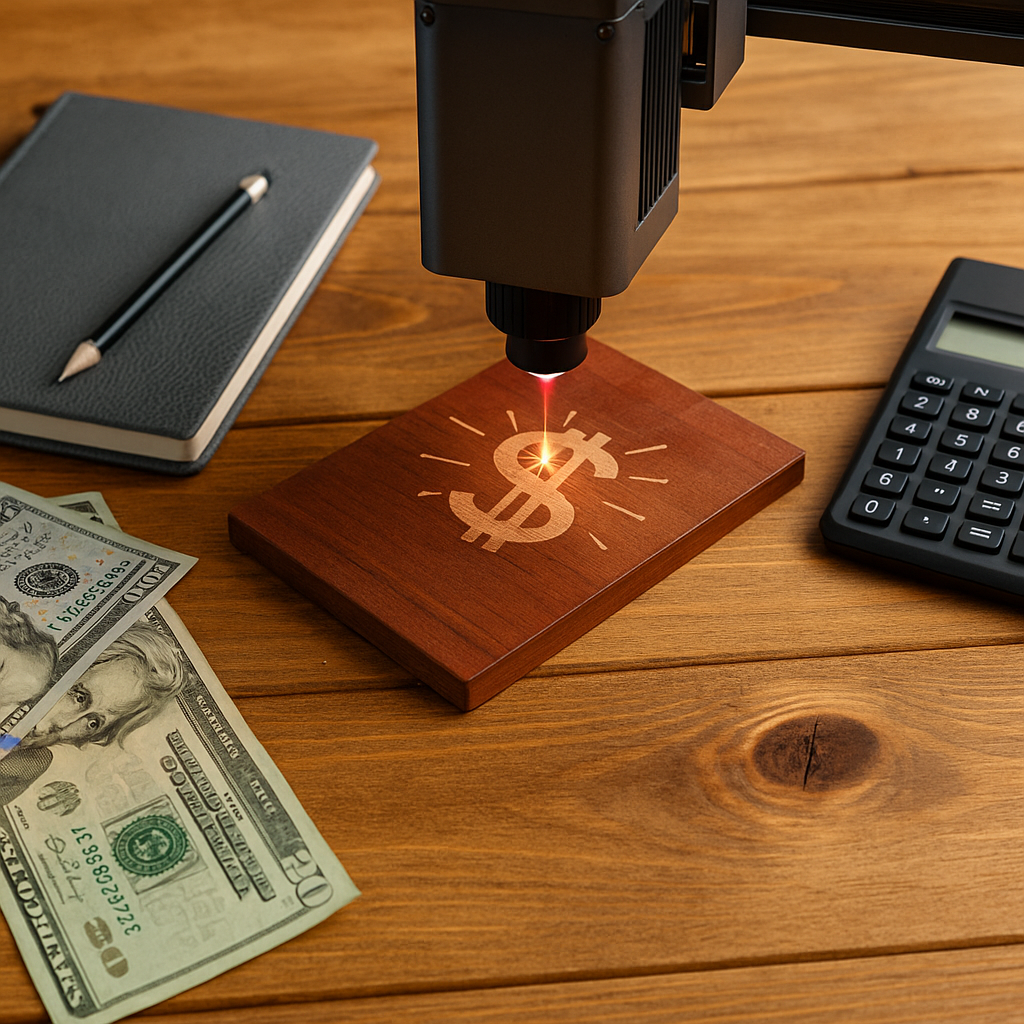
Last updated June 2026. Based on the business-planning questions our team fields from prospective laser engraving shop owners, the short answer is yes — a laser engraving business can be genuinely profitable, with typical margins in the 15-30% range and real examples of shops clearing $7,000 in a single holiday season on a $5,000 machine. This guide covers real startup costs, realistic margins, pricing by product, and the niches where the money actually is.

Tumblers, engraved plaques, and custom jewelry consistently top the best-selling list because they combine high demand with emotional value — buyers are paying for sentiment as much as the object. Tumblers are cheap to source and quick to engrave, making them ideal for bulk orders; plaques provide steady year-round demand from schools and corporations; jewelry carries the highest margins because personalization commands a real premium.
Typical engraving businesses report 15-30% profit margins on average, though efficient operations often do better. A worked example: a stainless steel tumbler costing $6 wholesale, engraved and sold for $25, nets a 50-60% margin after materials and electricity. Based on real shop feedback we've seen, ROI can come fast — many small shops cover their machine investment within 12 months when they focus on top-selling items. One husband-and-wife shop cleared $7,000 in their first Christmas season alone on a $5,000 CO2 laser, mostly through engraved ornaments, cutting boards, and mugs.
Earnings scale with focus and consistency: entry-level operations often net $1,000-$5,000 per month, while established shops with repeat corporate or wholesale clients can bring in $10,000 or more monthly.

Startup cost depends heavily on which laser type you start with:
Beyond the machine: budget $500-$1,000 for starting materials (wood, acrylic sheets, leather, metal blanks), $50-$300 for design software if your machine doesn't include what you need, $200-$1,000 for workspace setup (ventilation, workbench, safety equipment), and $500-$1,000 for a website or marketplace presence. All in, a workable setup starts around $1,500, while a more professional operation typically runs $5,000-$15,000.
One smart way to reduce upfront cost: a single multifunction machine that both cuts and engraves across wood, acrylic, and coated metals lets you test multiple product categories before committing to a second, more specialized machine.

Pricing is one of the biggest early hurdles — undercharge and you erode your own margin, overcharge and buyers hesitate. A base price plus complexity add-ons works best:
Always charge more for rush jobs, complex designs, or specialty materials, and consider charging separately for design setup time so customers understand they're paying for artistry as well as the engraving itself. Small upsells compound quickly — a coaster set alongside an engraved cutting board, or a stand alongside a memorial plaque, can meaningfully lift average order value without much added effort.
The market isn't saturated if you pick a lane and own it. Personalized gifts remain evergreen, but niches like industrial engraving (tool marking, serial numbers, barcodes) are consistently lucrative and less crowded. Pet memorials, wedding keepsakes, and outdoor signage are growing sub-niches where customers actively search for local providers rather than big-box alternatives.
Most successful engravers sell across multiple channels: Etsy for built-in audience and gift-search traffic, Shopify for building your own brand without marketplace fees, and local channels — farmers' markets, boutiques, craft fairs — for community connection and instant sales. Many businesses start local to keep logistics simple, then expand online once systems are in place.
Seasonal timing matters enormously — Christmas ornaments, Valentine's jewelry, and graduation plaques sell heavily when marketed early; some shops report making nearly half their annual revenue in the six weeks before Christmas through engraved gift bundles.
Entry-level operations running part-time often net $1,000-$5,000 per month, with payback on equipment typically within 18 months. Focusing on a specific high-demand niche (weddings, corporate gifts) can shorten that timeline to under a year.
A diode laser ($300-$700) is the lowest-cost entry point, suitable for wood, leather, and some acrylics. It won't handle metal, so plan to upgrade to a CO2 or fiber laser once you've validated demand for your specific products.
Jewelry and personalized gifts typically carry the highest margins because customers are paying for sentiment, not just material cost. Tumblers and drinkware have lower per-unit margins but higher volume potential, especially for bulk corporate or team orders.
The broad personalized-gifts market has real competition, but specific niches — industrial marking, pet memorials, wedding keepsakes — remain underserved relative to demand. Specializing in one or two categories tends to outperform trying to serve every market at once.
Want a sourced recommendation for which machine fits your specific product plans and budget? See our guide to the best laser engraver for small business, or reach out to our team directly.

Shipping Insurance ($89)
placeholder

Leave a comment